

Talk Details
2026 Talks
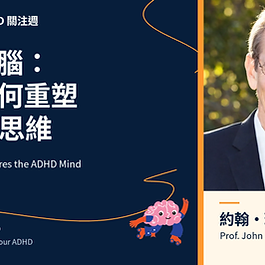
Spark Your Brain: How Exercise Rewires the ADHD Mind
You want to focus, but your brain won’t cooperate. You’re ready to try exercise, but worry your motivation won’t last. Join Dr John Ratey, Associate Clinical Professor of Psychiatry at Harvard Medical School and co-author of Spark and ADHD 2.0, as he begins with an unexpected story from his clinical practice and explores the fascinating connection between movement and the ADHD brain. Is moving your body simply a way to burn off energy? And where could you start amid the demands of life in Hong Kong? This talk may change how you see exercise, and help you see your own brain in a new light.

High-Functioning ADHD: Why Good Grades and Career Success Can Coexist with ADHD
Do good grades or career success rule out ADHD? Dr. Wilfred Wong’s chosen topic opens a conversation about the gap between outward achievement and a person’s own experience.
This session invites a closer look at what the label “high-functioning ADHD” brings into view.

ADHD, Anxiety and Depression: Understanding the Differences and Co-occurring Conditions
How should we understand the differences and relationships between ADHD, anxiety and depression? Dr. Tso Kwok Chu’s selected topic focuses on co-occurring conditions and a question that many people find confusing.
An introduction for viewers who want to organise their understanding and the questions they may wish to discuss with a professional.

From Being Given Up On to Nurturing Others: How SEN Sports Coaches Can Make a Difference for the Next Generation
What can change when someone once given up on goes on to nurture others? Abraham Kok’s selected topic connects a personal journey with the role of sports coaches supporting the next generation of young people with special educational needs.
A chance to reflect on growth, encouragement and possibilities on the sports field.

What Can Schools Do? Real Experiences of Using Movement to Support Students with SEN
What can a school do when a student is reluctant to join in, fears losing or gives up after one try? Principal Shum Lap Ping’s interview draws on school experience to explore adjustments to activities, difficulty and instructions.
The outline also asks how to start without specialist equipment, and how parents and teachers can notice a child’s engagement and enjoyment before deciding what to try next.
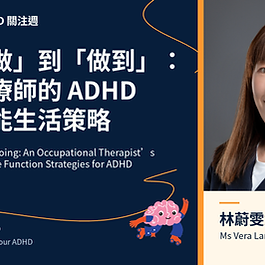
From Wanting to Doing: An Occupational Therapist’s Everyday Executive Function Strategies for ADHD
Wanting to do something and getting it done can feel far apart. Vera Lam’s session focuses on everyday executive function in ADHD and approaches the subject from an occupational therapy perspective.
A conversation about the practical side of moving from intention to action in daily life.
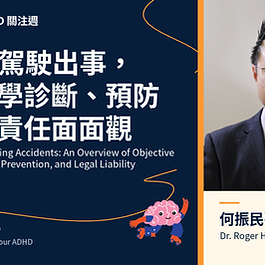
ADHD-Related Driving Accidents: An Overview of Objective Medical Diagnosis, Prevention, and Legal Liability
What deserves attention when distraction, impulsivity and driving safety meet? Dr. Roger Ho’s presentation uses driving scenarios to discuss ADHD assessment, preventive measures, and the relationship between medical information and legal responsibility.
It also addresses everyday considerations such as phone distractions, preparation before a journey and route planning.

From “I Said It, Then Forgot It” and “Sitting Still Is Boring”: Building a Cantonese Voice-Powered “External Brain” for ADHD with AI
An idea arrives, then disappears before you sit down to organise it. This session explores the idea of a Cantonese voice-powered “external brain” for ADHD, bringing AI into a familiar way of expressing thoughts.
A starting point for considering how spoken ideas might fit into everyday note-taking and organisation.

ADHD Parent Discussion Group
What is one everyday challenge you would like to understand better as a parent? Join Dr. Dennis Cheung and other parents to share experiences, bring questions and hear how others approach similar situations.
Use the conversation to organise your thoughts and consider a next step to try when supporting your child.
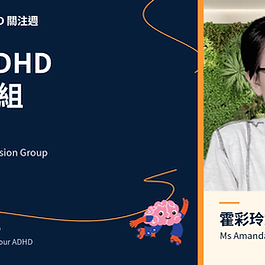
Adult ADHD Discussion Group
Is there a small goal you want to move forward but keep getting stuck on? Join Amanda Fok and other adults with ADHD to exchange ideas about tools, habits, mindset and everyday surroundings.
Bring a real-life question, hear other people’s experiences and choose a small step you would like to try.

ADHD Everyday Strategies: A 30-Minute One-to-One Coaching Experience
Do you know what you want to do but find yourself stuck when it comes to getting started, managing your time or keeping going? Whether you want to improve your daily routines or explore ways to support your child as a parent or caregiver, you can bring one specific question and experience ADHD Coaching first-hand.
Certified life coach Elizabeth Ng, who has experience supporting ADHD families, will use questions and feedback to help you review your current situation, clarify your goals, explore approaches that fit your circumstances and identify a next step to try.
You can discuss getting started, managing time, organising daily life or supporting your child with everyday challenges. Coaching is a goal-oriented, action-focused conversation. It is not psychotherapy or counselling, and it does not replace medical assessment or treatment.
Dates: 24 and 25 October 2026
Format: One-to-one experience, 30 minutes per session
Fee: Free, with 6 places in total across both days
Registration status: Closed to new registrations
Eligibility: Aged 18 or over, including parents and caregivers

Beyond Dopamine: Rethinking the Brain’s Chemical Signals
Have you ever noticed changes in your focus, mood, sleep, or energy after eating certain foods? This talk introduces histamine, a natural chemical in the body that plays a role in brain function and immune responses. We’ll explore how histamine, food sensitivities, and the gut may be connected to some experiences commonly associated with ADHD, why certain foods may affect people differently, and what current research tells us about these possible connections. You’ll leave with a broader understanding of the factors that may influence your day-to-day experience with ADHD and practical questions to consider when exploring your own health.

The Other Side of Focus: Mind-Wandering and Creativity in ADHD
The brain has two familiar modes. When we focus on a task, the task-positive network (TPN) switches on. When we daydream or think about ourselves, the default mode network (DMN) becomes more active. The two usually take turns, like a seesaw. Research suggests that in ADHD, the DMN does not settle down reliably during tasks. It keeps cutting in, so attention comes and goes. This talk explains the idea in plain language and looks at what can help in daily life.
